
5 Best Ux Practices To Improve Your E-Commerce Website Experience

Tech innovations have completely revolutionized shopping practices and purchase behaviors. The widespread popularity of online shopping leads to a dramatic surge in demand for ecommerce. From daily essentials to luxury goods, there’s nothing that you can’t get online. Some of the leading ecommerce ventures also offer a host of crucial products including life-saving drugs.

The unique possibilities and profitability of the ecommerce arena have been the prime reason for its popularity. Take a look around, and you will find numerous individuals venturing into the ecommerce arena.

UX

It’s here that ecommerce owners need to take the initiative. Every potential buyer would wish for an exceptional and unsurpassed shopping experience and commerce owners should strive hard towards offering that. Here’s what you need to know in this context.

Following the best practices

Following and adopting the best approaches will help you attract huge traffic to your site. As an ingenious ecommerce owner, you should know the best UX practices thus captivating your potential audience. Catch a glimpse of these innovative UX practices for an exceptional User Experience.

1.      Responsive designs

Whether they browse sites from their mobiles or plan to use their tablets while shopping, responsive websites will ensure the best shopping experiences. If reliable market stats are anything to go by, a whopping 50% of ecommerce traffic comes from mobiles. That clearly reflects the paramount significance of mobile-friendly sites and mobile conversions.

If you are still without a responsive website, it’s high time to do something about it. Sites that aren’t mobile-friendly lose out on innumerable customers.

2.      Clean, clutter-free, and flat designs

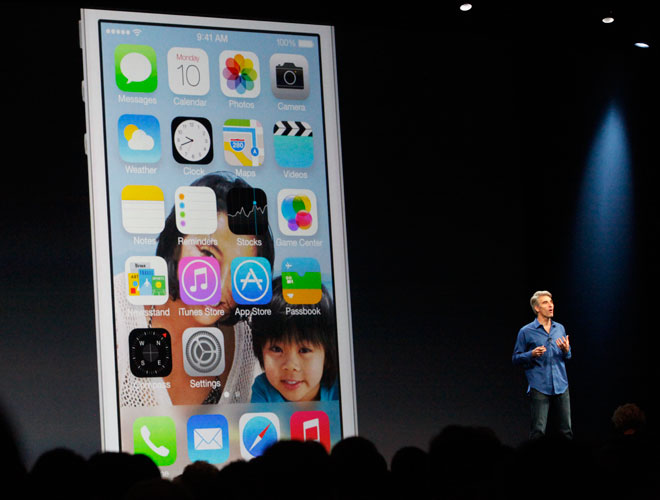
Customers today are increasingly opting for simple, honest, and hassle-free browsing experiences. With some of the leading tech giants like Apple, Google, and Microsoft minimizing the look and appearance of their Operating Systems, clutter-free and clean designs have become the need of the hour.

While clean designs offer ample space to the crucial elements of your website, focused site designs will help you present your products in the most efficient manner.

3.      Simple and easy navigation

Customers are likely to abandon a site that offers complex navigation. Quite naturally, ecommerce owners should ensure easy, simple, and uncomplicated navigation for users. Try including diverse shopping options thus making navigation easier than ever!

4.      Unmatched product photography and presentation

When you purchase products from a traditional brick-and-mortar store, you get clear and close views of your chosen products. Your ecommerce store should offer similar experiences. No matter what kind of product you sell, it is imperative to offer crystal clear views to your target buyers.

Unique presentation and product photography is something you should achieve. Offer multiple-angle views along with product presentation videos.

5.      Product details and Add-to-Cart buttons

Make sure the product details and add-to-cart buttons are designed in a unique manner. That will play a crucial role in captivating your potential buyers and offering them unmatched shopping experiences.

With these UX practices in mind, you will surely ensure unparalleled shopping experiences for your potential customers and enthusiastic buyers.
 

How The Demonetization Crises Has Led To Increase In E-Wallets

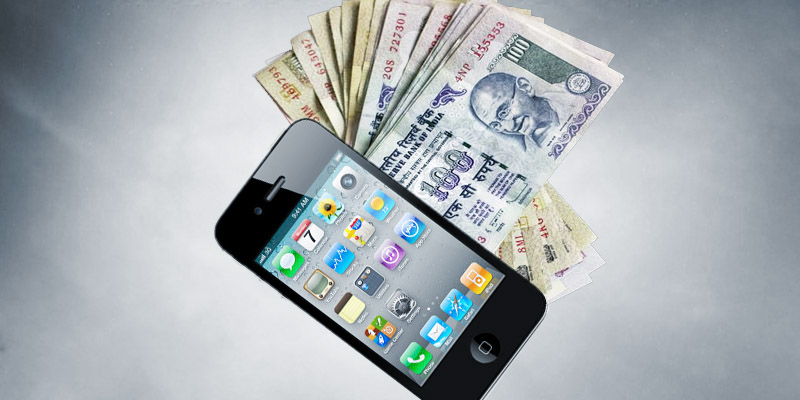
The government’s decision to ban the Rs. 500 and Rs. 1000 notes have sent shockwaves across the country. While this initiative is to curb the increasing menace of black money in India, the country is experiencing a major shift in purchase and investment behavior. Demonetization has led to the increased usage of Demonetization Crises and electronic payment modes. With lower denominations such as Rs. 100, Rs. 50, and others being accepted, the entire country is finding it difficult to handle expenses.

Such situations have created the demand for an effective alternative, and it is here that mobile wallets and e-payments have come into the picture. From occasional purchases to daily expenses, people are resorting to electronic payments for all of them. Let’s take a look at the real scenario.

Gauging the situation

Electronic payments and online transactions are highly popular amongst the urban population. With the increasing dependence on app-based purchases, urban India opts for the digital way when it comes to making payments.

Demonetization has also resulted in the dramatic surge of mobile wallet usage. Digital media consumption has shot up by quite a few notches, as individuals are making most of their payments via online channels. A quick look at stats will help you understand the situation in a better way.

Statistics speak

According to reliable market stats, digital wallet usage will increase by a whopping 140% by the end of 2018. On the other end, the global markets for mobile wallets will register a growth rate of 34% by the year 2020.

These insights clearly explain the major shift in India’s economy. Mobile wallets bring significant changes in purchase behaviors and spending habits, thus preparing the grounds for ‘cashless India. ‘

Demonetization and digital India

Cashless payments and digital wallets have been a part of the global economy for a long time. However, the business landscape of our country and the economy hadn’t been quite warm to the concept of digital payments.

The recent demonetization plays a vital role in this context. With two of the highest currency denominations being banned, consumers don’t have a choice other than resorting to mobile payments.

Mobile wallet companies and online-transaction service providers are coming up with brand new ways of attracting customers. The increased usage of plastic money plays the key role in the growth of companies such as Paytm, Ola Money, and others. While the first company experienced a whopping 200% increase in app downloads, the latter witnessed an upsurge 1500%.

Hard-hitting consequences

With these mobile wallets, you can make all kinds of crucial payments such as utility bills, mobile recharge, ticketing charges, shopping, and more. Quite naturally, the shift towards digital India is quite visible and apparent. However, some of the major roadblocks can wreck havoc on this vision of the Indian government.

Eliminating the ‘great divide’ between rural and urban India will be the first thing to do. That will take the country towards digitization and fulfill our Prime Minister’s vision of a digital, fast-paced, and smart India.

A Look At The Fake iOS Apps Nuisance

Although the iOS platform has achieved unsurpassed popularity in the tech arena, fake app issues have maligned its environment to a great extent. These apps are creating havoc in the iOS arena thus disrupting the environment to a great extent. With enterprise certificate registrations and matching IDs as their authentic and original counterparts, these apps grabbed a huge portion of market share.

Maligned and fake versions of popular apps such as Pokemon Go, Facebook, and several other gaming applications are the most common examples of this fake-app nuisance. Devices operating on iOS 9.3.5 are still getting affected by this fake iOS apps issue. On that note, it’s high time to take a look at the details.

How did it begin?

Fake iOS apps might have created a furore in the tech world. However, this isn’t the first time these issues are showing up. Possibilities of such incidents showed up way back in 2014 when a deadly technique known as ‘Masque Attack’ ensured successful replacement of original apps with fake, maligned, and poor versions. These apps never got identified easily, as they shared similar Bundle Identifier or Bundle ID with the original versions.

A look at the fake iOS apps nuisance

After learning about the incident, Apple decided to shut down processes and deal with vulnerabilities. However, such efforts didn’t help as 3rd party app stores started exploiting an exclusive feature in Apple’s code-signing process.

Delving into the nuances

Hackers and scammers have the greatest opportunity to make some quick bucks. All they need to do is create a maligned version with similar Bundle ID and that will be enough. Banking on the fame and popularity of the original version, fake-app creators can lure users into downloading these fake versions.

Controlling and monitoring app data is also important, as it might reveal crucial information about the user. Scammers can gain access to personal and identifiable data through the legitimate app. It goes without saying that users and consumers always stay at high risks of losing data and resources.

The grave consequences

By gaining access to such confidential data and information, crooks can have direct access to bank accounts. Especially, online buyers will be the sufferers as most of them make direct payments from the site.

Scammers will also have the opportunity to change and modify the function of a particular application. Although the situation is undoubtedly alarming and dangerous, precautionary measures can solve the problems to a great extent.

What to do?

Those incorporating and implementing in-app purchase functions must abide by Apple’s regulations. Validation of App-store receipts along with employ mechanisms are the two most crucial aspects in this context. App developers, designers, and creators should put their best efforts thus preventing hackers from reverse-engineering the original application.

Companies and businesses working on BYOD systems should tighten enterprise app security. Business owners should emphasize on the security of business applications if they are using the iOS platform.

Concluding note

Since the entire business and tech world depends on apps, fake-app issues will wreck havoc on their functions and operations. Let’s hope the counter-attacks on these counterfeit versions are successful.

Internet of Things (IoT) – Home Automation

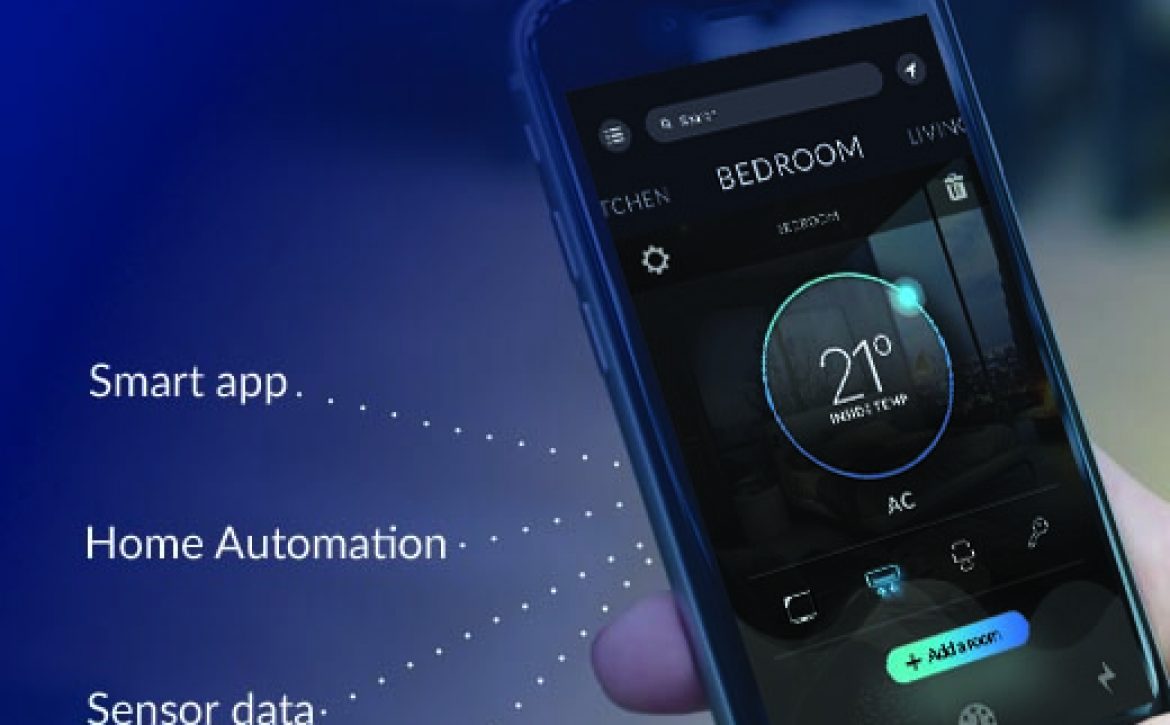
GoodWorkLabs is a global leader in home automation using Internet of Things (IoT). The Technology Superstars at GoodWorkLabs are constantly working on applications that can help simplify your life.

With Home Automation, you no longer need to worry about grocery lists, Light settings, AC temperature etc. We understand your time is precious and want to change the way you manage your homes!

With Internet of Things (IoT) you can control the functionality of your home appliances at just one touch:

1) Adjust the AC temperatures in your Bedroom before you even reach home.

2) Set an alarm so that you are never late for the important things in life

3) Adjust the lights in your living room to create evening

4) Enjoy movie nights by setting your favorite movie lists on the TV

5) Never miss out on your grocery lists

 Internet of things IoT

This is just the beginning of the many awesome things IoT can help you with.

Contact us for your home automation requirements.

Apple Watch App Design and Development: SEQR

Are you constantly on the move, but at the same time worried about your loved ones?

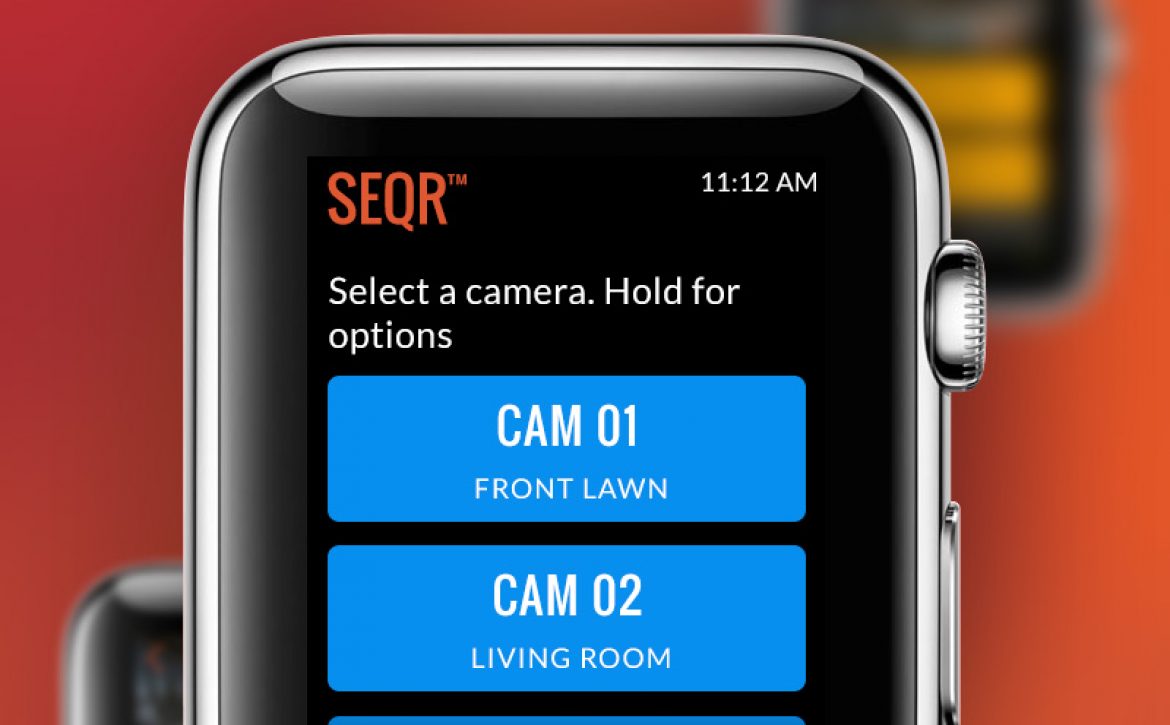
GoodWorkLabs’ innovative Apple watch App  SEQR lets you monitor your security cameras on your Apple Watch when it is synced with your mobile device.

Get instant alerts whenever any kind of motion is detected and notify your dear ones.


SEQR helps you:

1) Get an overview of the security cameras in your house

2) Seemlesly inter-change between cameras (living room, lawn, kitchen, bedroom etc)

3) Pinch Zoom option to get a clear picture

4) Motion sensor alert whenever any suspicious activity is detected

5) Live camera playback on your apple watch


Apple Watch app design and development

Watch the videos from your security camera at home, anywhere and anytime. Stay alert and stay updated on the safety of your loved ones.

Contact us for more any Apple watch app design and development requirements.


Handy Tips To Create A Successful VR App

Virtual Reality has gained immense popularity in the tech arena. By creating exceptional virtual experiences in the real world, VR has revolutionized several sectors. From the business arena to the tech landscape, VR triggers massive changes in human perceptions. If market reports are anything to go by, you will find nearly 815 VR apps in the leading app stores. These reports reveal a lot about the current scenario.

Present market trends indicate towards the budding friendship between business marketing and the VR technology. By the end of 2016, VR will prove to be a significant part of product marketing.

That creates the need for highly functional, interactive, and scalable VR apps. If you wish to create them for your business, here are a few tips to help you.

Handy tips to create a successful VR app

1.     Choosing the themes

The theme of the app will determine user experience to a great extent. Thrilling VR themes can give your customers an exciting experience. It’s here that you need to identify your goal. What do you want? Do you wish to add surprise elements or out-of-the-box visuals? Your choice will determine consumer experience.

2.     What’s your story?

When you opt for VR app development, you surely have an amazing story to share with your consumers. Determining and outlining that story is important. If it’s all about transporting consumers to enthralling locations and destinations, 360-degree videos will turn out to be the perfect options.

3.     Real-world experience

Try answering this question before delving deep into further discussions. What do you aim to do with an outstanding VR app? Since the Virtual Reality technology ensures unparalleled experiences for users, you will surely want your target audience to have a taste of that. VR apps offer the opportunity to translate your fantasies into reality. Quite naturally, your consumers will live their dreams sans the costs or risks of doing it in the real world.

4.     Decide the length

Creating an unsurpassed VR experience isn’t an easy affair. Once you are clear with the ideas, it will be time to determine a length. Make sure your VR video isn’t too long or short. Unnecessarily long videos will fail to retain viewers while the short ones will fail to provide the desired experience. Striking a balance is important, and three to five minutes is just fine.

5.     Choose the right partners

Whether you plan to hire experienced developers or reputed app development companies, following certain tips will be crucial. Inexperienced developers won’t have the adequate resources to develop highly scalable VR apps, and that will create dissatisfaction amongst your users.

Make sure you perform in-depth research and get in touch with the most efficient partners. VR app development is quite different from creating other consumer applications. Professional support and assistance are crucial necessities and not a choice in this context.

Signing off

With these effective tips, you will surely get your apps at the leading app stores. The Virtual Reality (VR) technology can transform user experience for the better, thus adding an entirely new dimension to the business marketing arena.

Who Wins The Battle: React Native Or Angular 2 Native Script

The Battle Of Frameworks

When it comes to building cross-platform apps, developers face critical challenges in the planning phase. The main debate revolves around the nature of the app. Should it be a hybrid application or simply a native one? However, if you have already made up your mind to work on the native platform, these choices aren’t that relevant. It’s here that you need to find out the most effective native app development software.

With the presence of both Angular 2 native code and Facebook’s React Native, developers will have a tough time making the final choice. Let’s take a look at both these options for a complete and successful comparison.

React-Native has been around for about 2 years, and became a really interesting framework since it can be used for Android and let us build cross-platform mobile apps. A few contributors also customized the framework to build desktop apps for Mac and Windows, which is quite amazing.

Angular Native is a relatively new JavaScript framework by Google, designed to make the front-end development as easy as possible. There are plenty of frameworks and plugins available. It can sometimes prove difficult to sift through all of the noise to find useful tools. It is much better than Angular 1. It is simpler on a high level, simpler on a lower level, and faster to achieve basically everything.


MOBILE APPS


The emergence of React Native

React Native emerged into the professional arena in the year 2015. As one of the most unique and useful offerings by Facebook, this particular tool revolutionized native app development processes. Here are some crucial benefits of using it:

Using the same code

With React Native, developers had the opportunity to use same-base JavaScript coding on both the platforms including Android and iOS. The tangential reliability on DOM was the prime reason for its popularity.

Supporting UI Views

React Native allows similar coding for alert windows on both the platforms including Androids and iOS. Developers won’t have to create separate codes for each of these platforms. They can now build high-performance native apps within a single code-structure.


Understanding Native Script

Compared to React, NativeScript has a complete and holistic approach towards app development. Developers can create it for once and run it across devices and platforms. Although possibilities of low-level UI components will be there, NativeScript is trying quite hard to fill those gaps.

Coupled with the features of Angular 2, this particular tool will help you create consistent applications. Developers will have better opportunities to conceptualize and create robust applications.


Drawing comparisons

A comparative study of both these tools will help you take a decision. The multi-platform features present in React Native supports the differences between various UIs. Quite naturally, this aspect imparts a unique flexibility and scalability to applications developed using React Native.

On the other end, NativeScript believes in creating universal experiences. Irrespective of the platform, applications will have similar UI experiences. When it comes to using NativeScript with Angular 2, you will require a distinctive and different coding architecture. However, that’s not the case with React Native.


Making the right choice

While picking the right option amongst these two, developers are often in a state of confusion. Both these tools have their special highlights which make them the best choices for native app development. It’s here that developers need to make the decisive move. Depending on your project needs, you will have to pick the right alterNative.

If your application contains numerous complex UI elements, React Native will be the right option for you. However, if you need single cross-platform coding for your application, Native Script can fulfill your demands. The crucial thing to realize when comparing the two native-focused approaches is that React Native and Native Script share a fundamental difference in approach to how they construct native apps from the same code base. Native Script takes a holistic approach, working to be a true ‘Write it once, run it anywhere’ framework. This means that a lot of the UI elements used will be decidedly lower-level, as NativeScript is attempting to manage the UI in a transparent and repeatable way between the multiple platforms it supports.

Add in the coupling with Angular 2, and you can create cross-platform applications that, through the virtue of Angular’s declarative UI focus, are more conceptually consistent than an application having to interpret between multiple UI paradigms.

Cross-platform application development has seen many rapid developments, and the recent flood of cross-platform and native development frameworks will only continue this pattern. Choosing between React Native and a combination of Angular 2 and Native Script is, in many ways, similar to choosing between React and Angular themselves.

React is designed as a blazing-fast lightweight rendering framework to be leveraged within the context of a larger application, and React Native continues this pattern of providing tools instead of patterns. Angular, on the other hand, is an opinionated application development framework that has a “right way” of developing applications in mind, something that the integration of Angular 2 and NativeScript carries further at the slight expense of deeper native device integration.

Thus the choice between the two is largely the same.

Is your application focused on complex UI with lots of rendering and custom elements?

If so, React Native might be the right choice for you. However, if having a single cross-platform code base with a declarative UI paradigm is more in-line with what you foresee for your application’s architecture, then combining Angular 2 and NativeScript can help you realize the same gains, all the while maintaining similar development patterns and program architecture.

The Choice is ultimately yours!

If you would like to know more about how you can use these technologies to build applications for your business, just drop us a quick message with your requiremnts


[leadsquare_shortcode]

How Can Apps Boost Customer Engagement With Retailers?

Even a decade ago, technology didn’t have much to do in the business arena. Especially, when it came down to building effective customer relationships, businesses relied on physical markets to a great extent. The emergence of tech innovations and mobile revolution has entirely changed the present scenario.

Today, customers no longer rely on manual operations and perform most of their purchases on mobile devices. Interactive, easily navigable, and intuitive applications ensure unsurpassed shopping experiences for consumers. That’s not all; they bridge the gap between sellers and their target customers across the globe.

Needless to say, the retail market also reaps the benefits of consumer apps. If you wish to know how, here are some pointers that explain the scenario quite well.

How apps can boost customer engagement with retailers

Quick look at stats

Before we delve deep into discussing the nuances, let’s turn to stats for a complete lowdown. Social media, gaming, and communication apps are the widely used options. However, there’s a different dimension to this story. According to reliable stats, an average user installs nearly 36 applications on his mobile, out of which 1 in 4 applications remained unused.

That reveals consumer behavior to a great extent. Your target consumers will only use your apps if they meet their expectations. So, how do these consumer apps manage to boost customer-retailer relationships? Take a look!

Apps Determining purchases

Apps play a crucial role in the sales process. When it comes to buying things online, a majority of app users refer to the respective business applications for more information. Out of two users, one relies on apps for making purchase decisions. Nearly 29% of these users leverage apps to take actions. Quite naturally, apps have a lot to do with the entire sales and purchase process.

It’s here that businesses and retailers need to sit up and take note of the entire issue. Customers always wish for unmatched browsing and shopping experiences, and that’s what these applications help them achieve.

How do apps boost customer engagement?

Since a large number of consumers rely on apps, retail businesses are increasingly investing in app development. By integrating stunning features into their applications, retailers are taking a step towards improving UX. Breeze through the following points and check out what they intend to do:

  • Push notifications: Sending push notifications through apps will be an effective way to engage consumers. Your target customers will get to know about special discounts and offers.
  • Incorporating store layouts: App experience today involves the implementation of store layouts. Your customers will know the exact locations of the chosen products, which will surely enhance their shopping experience.
  • Multiple payment options: The flexibility and ease of payments will make the shopping experience quite enjoyable for users. Multiple payment options will add to their convenience.

Parting thoughts

These are some of the innovative ways retailers are using to transform shopping experiences for the better. We can conclude that apps are playing the pivotal role in ensuring optimum customer satisfaction, thus boosting customer engagement with retailers.

The Tribune: GoodWorkLabs one of the leading Outsourced Product Development Firms in India

With the whole start-up buzz taking the country by surprise, there is enormous pressure on firms today to constantly innovate and create path-breaking products. The start-up journey gets all the more challenging when a women decides to tread the path of leadership.

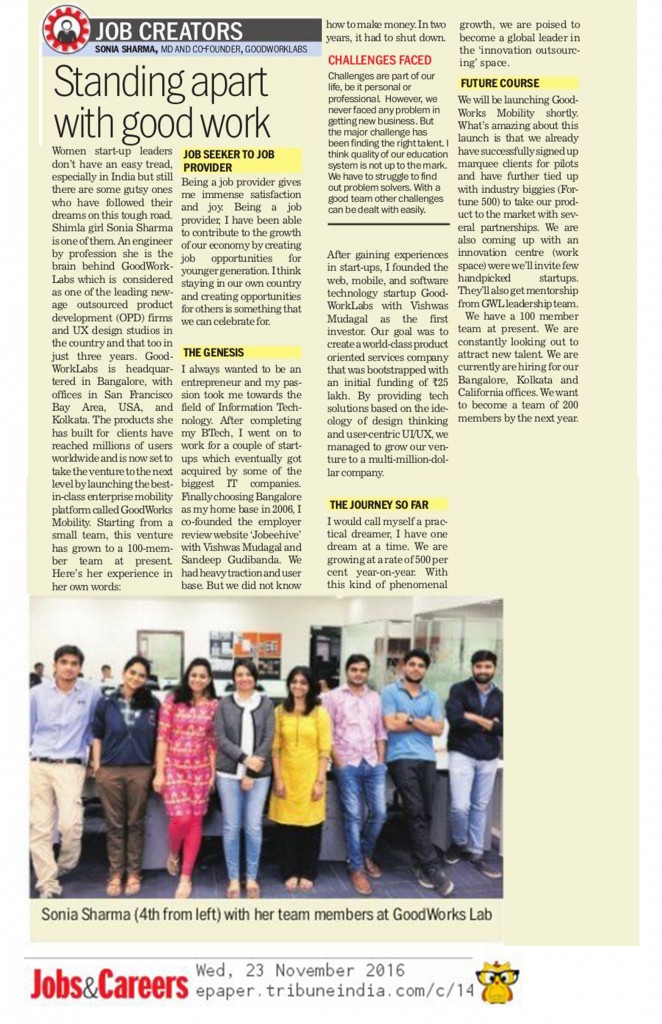
But then there are some who break through the clutter and go that extra mile to live their dreams. Sonia Sharma, MD and Founder of GoodWorkLabs shares her entrepreneurial journey with The Tribune


Being a job provider gives me immense satisfaction and joy. As a job provider, I have been able to contribute to the growth of our economy by creating job opportunities for younger generation. I think staying in our own country and creating opportunities for others is something that we can celebrate for“, says Sonia.


Sonia calls herself a practical dreamer with just one dream at a time. Clocking a 500% year on year revenue growth, Sonia is certain that her company GoodWorkLabs is going to the most sought after company for UX design.

Read the full story here on the Tribune


GoodWorkLabs in Tribune

Sonia Sharma, MD and Founder of GoodWorkLabs with her team at Bangalore, India


3 ways how UX can influence the Travel Industry

User Experience has turned out to be an integral part of the service sector. When it comes to designing products and services, business owners are giving more attention to User Experience. Gone are the days when businesses offered a fast and hurried walkthrough to their visitors. The present times herald the significance of UX and how it can revolutionize product designs.

Statistical insights will help you uncover the real scenario to a great extent. According to market stats, almost 40% of web visitors will abandon a site that exceeds the 3-second loading time. Sites that fail to offer complete information or offer complicated navigation can’t retain potential customers.

Therefore, user experience designs play a crucial role in customer retention and successful conversions. And that holds true for every sector. On that note, let’s take a look at the trends in the travel sector.

UX Pointers for the Travel Industry

Trends in the travel sector

There’s no denying the fact that the travel industry is one of the most profitable sectors. Since this particular industry deals with considerable investments, it’s imperative to find out what it thinks about UX. Take a look!

With the rapid emergence and widespread popularity of the app revolution, booking vacations and holidays have become easier than ever! According to travel industry reports, a whopping 89% of holidaymakers in the UK opted for online vacation bookings.

Quite naturally, these trends create the need for exceptional User Experience. Travel companies along with travel sites are trying their best to develop official sites in a unique manner.

1.     Critical and complicated booking process

In-depth market research will reveal the entire situation. If research reports are anything to go by, then most of these travel sites will score very low in their booking processes and functions. Although the booking process happens to be an integral part of UX design, the majority of travel sites fail to offer unique experiences in this context.

2.     Inaccessible forms

Booking forms are crucial parts of the entire project. However, most of the sites fail to offer desired results in this context too. Forms should be easily accessible to visitors, which isn’t what happens in reality.

It is undoubtedly one of the most crucial parts of the booking process and hence needs to be optimized for users.

3.     Designs should meet accessibility

While creating User Experience designs, it will be highly imperative to ensure accessibility. If you are running a travel site, it will be imperative to cater to a diverse group of people. Make sure the headlines and other important text portions are clearly visible. Choose the fonts and background colors carefully, thus ensuring clear visibility even for partially-sighted people. Adding provisions for special requests will also make your site exceptional.

Refining User Experience

While concluding, it’s quite imperative to recognize the benefits of exceptional User Experience. Especially, if you are operating in the travel sector, a unique and customer-oriented approach to UX designing will be the best thing to do. With these UX pointers, your travel website will surely earn brownie points.

Ready to start building your next technology project?