
Hybrid App Vs Native App – Which one is better?

Hybrid Mobile App Development

In 2019, the number of mobile phone users is estimated to reach 4.68 billion.  Hence, this is enough reason to stress the importance of having an online presence in the form of mobile apps. Now the next and major question is which approach to choose for app development, native or hybrid?

We understand that picking the perfect mobile development approach is a tough task. That’s why in this post, we have tried to clear the confusion by laying down circumstances in which Hybrid app development makes sense.
Hybrid App Development

Why is Hybrid mobile app development more preferred?

As stated by the Ionic Developer Survey 2017, in which 13000 developers participated, 32.7% of developers are expected to completely abandon native app development for Hybrid app development. Also, there was a 700 percent decrease in developers developing exclusively with native tools.


Why Hybrid mobile app development outscores Native mobile app development?

Hybrid app development utilizes web technologies such as HTML5, JavaScript, and CSS while providing access to native platform features. The best examples of successful Hybrid mobile applications are Instagram, Basecamp, Yelp, and Uber.

These apps can access the native features like camera, contacts and at the same time, it runs on both Android and iOS.
With the advent of Hybrid mobile app frameworks such as PhoneGap, Ionic, and React Native, the options in mobile app development have diversified.

There are sizeable advantages for opting hybrid mobile app development.

To start with, the talent pool of Hybrid App developers is bigger than the native app developers, thus making Hybrid app development a cheaper venture than native apps. And you already know that every penny saved is a penny earned.

With Hybrid app development, multiple app platforms can be targeted without the requirement of maintaining multiple code bases. This, in turn, reduces the time to market and enhances the outreach to the users.

The following are key benefits of using Hybrid application development:

  • Fast track development: single code base for all the platforms
  • Easy to test and implement changes and scale to other platforms
  • Inexpensive in all the aspects

Just like how every coin has two sides, there are some cons of opting for hybrid mobile app development as well. Consider this as well before opting for hybrid application development.


Disadvantages of hybrid mobile app development

Since a single code is used for all the major app platforms, it is difficult to match up with the performance of native apps. There are also some performance issues because of some device constraints in Android and iPhone. 


With the tech world evolving at a drastic rate, it will be difficult for organizations to stay updated with the latest features and hardware capabilities when they choose the hybrid framework. It is both a time consuming and cumbersome process altogether.


Why choose Hybrid App development?

Hybrid app development solves the chief purpose of fast-track development and a quick launch in the market. The added advantage is that it is inexpensive and there is no functional or visual difference to users.


Furthermore, hybrid apps are perfect for startups who desire a quick lane to market. Quick prototyping helps in getting an early feedback, so that unnecessary expenses on development can be avoided later. All you need is to build a Hybrid MVP and test your concepts, if it satisfies all the standards, move ahead with developing the Hybrid app or migrate back to the native app.


It is a general perception that hybrid app development has several constraints with custom features and that developers can only use the features that can be wrapped in a native container. But, the real fact is Hybrid app can cover up to 90% of standard features.


Also, the possibility to create something new with the modules already written in native for specific platforms is very high.

Another great usage of hybrid development is when you need an inner ‘corporate’ purpose app like conference apps, events and such. These applications are distributed via links and not uploaded on the Google Play or App Store.


How to decide whether Hybrid is the right choice for your business?

There is no clear choice when it comes to native or hybrid. No matter which option you pick you will have to make certain compromises. Your decision should obviously be based on your requirements, skills of developers, and budget.  Also, there are few mandatory questions that you must ask yourself before arriving at any decision.

Do you have strict budget constraints? If yes, then the hybrid app development will solve your purpose. On the contrary, if your app requires a lot of unique features in your app then native app development should be your first choice.


Summing-up

The decision of choosing the right approach for app development is not an easy one. It is like choosing between an iPhone or Android phone. The best approach to choose is to make a list of priorities and then test both app development approaches for appropriateness.

Also, the choice of app development approach varies with the project complexity. With all the pros and cons of hybrid and native app development in mind, you can make an educated decision.

If you would like a FREE consultation on the best approach for your App development needs, then drop us a quick message here

[leadsquared-form id=”10463″]


How Flutter Will Lead To Better Mobile App Development

Flutter in Mobile App Development

Cross-platform app development is not just a buzz anymore. The industry has accepted it as an inherent property required for today’s market. Flutter is one software developer kit helping developers in this direction.

Working as one of the most reliable open sources, Flutter is applicable for both iOS and Android application development. Google has created Flutter with current digital app demands in mind. This SDK has proven to be helpful for online businesses in sectors such as e-commerce, food, and shopping. Flutter allows businesses to create mobile applications with advanced features such as geolocation, camera, storage, network, and much more.

Flutter mobile app development

Why is Flutter required in today’s market for App Development?

Flutter is soon gaining traction among developers for its ease in app development. Here are 5 reasons why Flutter is required for App development in today’s market.

1. Vast widget catalog

Using Flutter allows you to access multiple widgets in one catalog. Finding every widget organized in one place makes selection hassle-free. You can decide features and functionalities of your app and conveniently pick widgets. Dart helps you write app code and you can even include IntelliJ plugin to your application.

2. Open source enhances accessibility

Open-source development is another reason why Flutter is needed right now. Easy accessibility decides the success of any app. Which is why open collaboration brings user-friendliness to the table. An app design achieves a whole new level of scope with open source development. There is no other platform where you can find as many choices as in Flutter.

3. Easy app editing

While developing, an app has to go through multiple edits. Some features are added while others a removed. Flutter makes these changes easier. The platform provides Visual Studio code as well as Android Studio code. Using these integrations makes developed product smarter. Different variable types, function definitions and modules are used to create changes. In fact, a developer can also conduct push or pull via SCM service.

4. Dart matches Java features

Flutter gives you Dart that matches with Java in terms of feature similarities. That similarity allows developers to make a shift without any trouble. Editorial integrations, widget quality, and application features come together to make it a perfect kit for mobile app developers.

5. Single codebase for Android and iOS

With Flutter, mobile applications can achieve cross-platform functionality. A single codebase works on Android as well as iOS. So, there is no need to worry about shifting from one platform to the other and write the app from scratch. The app codebase works on both platforms, making your app more secure and protected in terms of patents.

All in all, Flutter is here to improve the standards of mobile app development projects. It is giving superior UI experience to the apps and providing feature addition capacity during an ongoing development project. The compatibility reaches the roof with Flutter, as it comes with customizable widgets.

However, all the benefits of Flutter come down to the expertise of the developers. Your team of mobile developers has to understand this technology and apply themselves completely. Companies that know how to leverage Flutter will lead mobile development to its future.

Hopefully, you feel ready to leverage this mobile development technology to your business advantage.

7 Things To Know Before Building An Android App

Creating The Perfect Android App For Beginners


Building an Android app comes down to two major skills/languages: Java and Android. Java is the language used in Android, but the Android part encompasses learning XML for the design of the app, learning the concepts of Android, and using the concepts logically with Java.

Once you learn Java and XML; XML is really easy to get used to, and you should learn the language as you program your app rather than learning it beforehand like you would with Java. You need to learn how to connect these two using Android principles.

Android-app-7 things-to-know-goodworklabs

Now for a total beginner, we recommend YouTube tutorials to get the basic idea of how to install Eclipse (the Integrated Development Environment, or IDE, for Java) and the Java Development Kit (JDK). It also helps to get the basic idea of syntax behind Java concepts, such as for loops and if statements.

Here is an example: Click to watch video 

But from then on, after you have learned the very basics, we HIGHLY recommend ditching the YouTube tutorials in favor of a book or a lecture series. YouTube tutorials very often do NOT give intuition behind important concepts.

Keep these following things in mind as you venture on your journey of building a successful Android App.

7 things to know before building your first Android App:


1. You need to learn Java, there is no way around it. Knowledge will only help you through the process of building an app.

2. Android part encompasses learning XML for the app design, understanding concepts of Android and using said concepts programmatically with Java.

3. Beginners should probably use an IDE. It is really useful and lets you experiment.

4. Building your first app is time-consuming: it won’t happen overnight. This is not a project for those looking for a shortcut to success.

5. When stuck on a problem which will inevitably happen, turn to Stack Overflow. Utilize Google, and have no shame in asking assistance from the experts.

6. Before hitting the market and start developing an application you should conduct a proper market research. Analyzing the market thoroughly will give you insights about your competitors, their strategy, their strengths and weakness too. This information will prove to be useful as you can avoid repeating the mistakes your competitors made.

7. Defining your target audience is very important as the audience plays a huge impact on the development of your mobile application. All these questions such as who will be using this app, and how is it going to help them, should be answered well before hand.


Best Of Luck.

As A CTO You Must Know These IT Predictions for 2017-18

Predictions For 2017-18

Disruption has moved from an infrequent inconvenience to a consistent stream of change that is redefining markets and entire industries. In 2016, we saw the astonishing rise of Pokémon Go, which demonstrated accelerated digital change in areas such as augmented reality. Gartner’s top strategic predictions for 2017 and beyond describe not only the disruptive effects of digital business innovation but how secondary ripple effects will often prove to be more disruptive than the original disruption.

Three high-level trends emerge from the predictions:

  • Digital experience and engagement will draw people into non-stop virtual interactions
  • Business innovation will create extraordinary change from mundane concepts
  • Secondary effects will be more disruptive than the initial digital change


discussion-community

Gartner’s Top 10 Predictions for 2017 and Beyond

  1. Immersive Shopping Experience – By 2020, 100 million consumers will shop in augmented reality.

Whether they allow you to try on makeup or place virtual furniture in your home, immersive technologies such as AR increase consumer engagement by enabling them to fully explore features and conveying additional information that can aid in a buying decision. Popular applications, such as Pokémon Go, will help propagate the technology and bring it into the mainstream. 1 in 5 global brands will use AR for shopping by the end of 2017.

2. Voice First Browsing – By 2020, 30% of web browsing sessions will be done without a screen.

Many teens already use voice search daily and new audio-centric technologies, such as Google Home and Amazon’s Echo, are turning “voice first” interactions into ubiquitous experiences. By eliminating the need to use your hands and eyes for browsing, vocal interactions extend the web experience to multiple activities, such as driving, cooking, walking, socializing, exercising, operating machinery, etc. By the end of 2017, watch for room-based screenless devices to be in more than 10 million homes.

3. Mobile Apps Decline – By 2019, 20% of brands will abandon their mobile apps.

Many brands are finding that their mobile apps are not paying off. They simply haven’t delivered the level of adoption and customer engagement that companies expected. App stores are crowded and the cost of application support in not only maintenance, upgrades and customer support but also marketing to drive downloads, exceeds original ROI calculations. Google’s effort to make the mobile web more “app like,” will gain traction, and companies will opt to reduce their losses by allowing their apps to expire. Watch for Apple’s reluctant embrace of the mobile web as a vehicle for customer engagement.

4. Algorithms at Work – By 2020, algorithms will positively alter the behavior of over 1 billion global workers.

Employees, already familiar with behavior influencing through contextual algorithms on consumer sites such as Amazon, will be influenced by an emerging set of “persuasive technologies” that leverage big data from myriad sources, mobile, IoT devices and deep analysis.

JPMorgan Chase uses an algorithm to forecast and positively influence the behavior of thousands of investment bank and asset management employees to minimize mistaken or ethically wrong decisions. Richard Branson’s Virgin Atlantic uses influence algorithms to guide pilots to use less fuel. By year end 2017, watch for at least one commercial organization to report a significant increase in profit margins because it used algorithms to positively alter its employees’ behaviors.

5. Blockchain Grows Up – By 2022, a blockchain-based business will be worth $10 billion.

Blockchain technology is established as the next revolution in transaction or event recording. A blockchain ledger provides an immutable, shared view of all transactions between engaging parties in a distributed, decentralized network. While the Bitcoin blockchain ledger is itself well-understood, blockchain remains an immature technology. By 2020, new businesses and business models will emerge based on smart contracts and blockchain efficiencies. These smart contracts automate at a reliability, customization level and speed not achievable with traditional business systems.

6. Digital Giants Everywhere – By 2021, 20% of all activities an individual engages in will involve at least one of the top-seven digital giants.

Many of us interact with at least one of the digital giants (by market capitalization: Google, Apple, Facebook, Amazon, Baidu, Alibaba and Tencent) in our digital worlds of web search, mobile, social networking, messaging and music streaming. As the physical, financial and healthcare worlds become more digital, many of our activities will be connected and within reach of the digital giants. Note that collectively, the digital giants will have direct and indirect knowledge of what we do as individuals and the fundamental issue will be what they do with the data.

7. Innovation Requires Greater Investment – Through 2019, every $1 enterprise invest in innovation will require an additional $7 in core execution.

Many organizations have adopted a bimodal style of work to jumpstart innovation. While exercises are designed to experiment and “fail fast,” those that do receive approval for implementation involve a level of complexity, scale, and business change ramifications that may not have been considered in the initial planning stage.

8. IoT Saves Trillions – By 2022, IoT will save consumers and businesses $1 trillion a year in maintenance, services, and consumables.

Digital twins capture real-time data, allowing smarter maintenance and service schedules for physical objects such as large pumps, airframes, and turbines. When the sensor-enabled real world twin sends data to the digital twin, it can simulate the physical state, allowing the digital twin to be inspected instead of the physical object. This would be helpful for a submerged sewage pump or any other asset in which on-site inspection is inconvenient, costly or hazardous.

Consumers, too, will benefit when they can extend the life of the oil in their cars from a prescriptive replacement “every 5,000 miles” to replacement triggered by a measurement of the engine’s performance.

Emerging and established companies need to keep in mind these predictions, especially the tech leaders during hiring and procurement. Investments need to be smarter, better and more calculative in nature.


Source: Gartner

Offshore Development For Dummies

Understanding Offshore Development

You’re comfortably relaxing on your couch and enjoying a football match. The television suddenly switches off and the switch box explodes with sparks flying around. You have no clue what has happened and you look up on the internet searching for an electrician. The local electrician is charging $100, whereas a veteran electrician from the neighboring community is ready to visit your place and rectify your electrical setup for just $30.

Whom will you call?


OffshoreDevelopment-Example


Keep these options in your mind as we dwell into the concept of offshore development.

From the past decade or so, an unexpected trend has arisen in the technology sector. Multi-national companies, start-ups, and even local businesses have started adopting the business models of offshore development services. Offshore development was something that only large global companies engaged in many years ago due to the geographical and language challenges that existed. Today, these are not a factor as communication and transparency challenges have been both negated due to the technology that has come into everyday life.

First, let us discuss what exactly is offshore development as well as why it has become such as a popular option for companies worldwide.

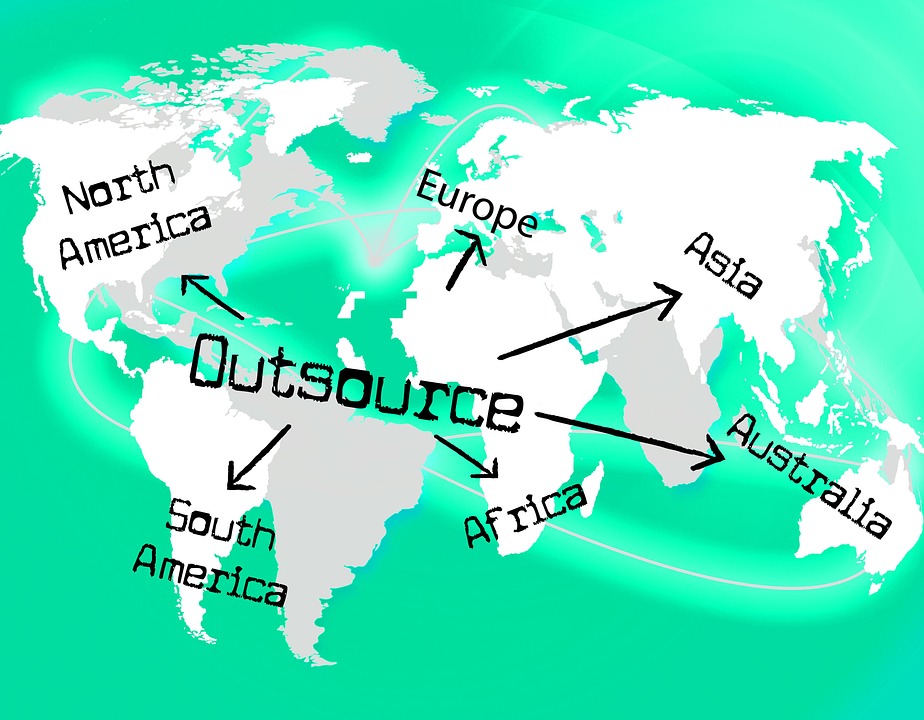
Offshore development means the process of outsourcing your development needs such as web, mobile or even custom software to countries such as India, Philippines, China and so on. The reason why people look at offshore web or software development is mainly because of the cost-savings and the time that can be saved. Also, it minimizes internal overhead costs. The offshore model has been around for a long while but with the world becoming more global and technology making it easier than ever before to communicate to anyone no matter where they are located, the demands for offshore development have increased substantially.

Offshore Development Outsource

The Offshore Development model is used for multiple things: offshore software and offshore web development or services such as customer service, data-entry, cold-calling along with BPO or KPO processes. The main reason is that a person in India or any other developing country will cost significantly less when compared to the US, UK or Australia. The bottom line is that if you are able to find a good offshore development partner, you can really save yourself time, money, HR hassles and other operational expenses. The key is to find a good offshore partner who has the experience, expertise and technical skills to accomplish what you need. Ranging from a simple website or even a fully operating customer service center, your offshore partner must be well equipped to handle your requirements.

Professional offshore development can be beneficial in the following ways:

Reasonable services :

Not all the countries boast of a talented pool of web developers and designers in abundance which makes it difficult to get work done at a nominal amount. The reason being that they charge substantially as they develop products knowing that they are in monopoly. It turns out to be quite expensive build a website or mobile app. Offshore development can disrupt the monopoly and be more cost effective.

Quality:

One of the best things about the offshore software companies is that they have a vast pool of talent and can render top notch development services. This ensures that the quality of the projects is superior and also matches the international standards.They also ensure that they utilize the best tools and technologies to create highly competitive products.

Communication:

Technology has ensured that there is no delay in any communication between the client and the developers. Offshore developers tend to be more approachable and communication friendly. This ensures that the process does not go haywire during any stage.

No deadline delays:

Following deadlines is a big aspect when it comes to product development. The entire marketing and operations of a company depends on the product being delivered according to the stipulated time. Offshore development can cut down these hassles as they have the flexibility of employing more resources at a lower cost.

24×7 availability:

Round the clock availability sometimes becomes a norm for a global company and offshore centers offer workflow accordingly which might not be possible in the parent country due to cost and labor-force constraints.

Conducive Environment:

Outsourced processes, usually are very strenuous in nature. The workforce needs to be seated in an environment that can boost productivity and reduce stress levels. It is one of the main factors why Offshore Development is a good option since infrastructure is available cheaply as compared to the parent country.

Security:

Security of confidential data and client properties is a buzzing concern when dealing with offshore companies. Most of the offshore development companies offer high end security protocols and systems to ensure the client’s data is never compromised.

And now, back to the electrician conundrum. If a veteran electrician with years of experience is ready to travel to your house at a cheaper rate, any sensible man would choose him over the $100 electrician. The same logic may also be applied to the concept of offshore development.

So, sit back and relax as your offshore partner takes charge of your processes and product development and frees you of the basic organizational hassles.

offshore development-Solution

Offshore development may seem a far fetch off for most of the most organisations, but if the current global trend is to be observed, it is one of the most trusted and cost effective options for an organisation that is looking to cut down on costs and build quality products.

How to be a strong willed UX designer?

Challenges for a UX Designer


According to LinkedIN, there are 900,000 UX designers in the world. How strong willed are you to be one of the best in the long run?

“ Determination is the wake up call to the human will”

A designer is a commercial artist confined by factors such as economical efficiency, technological constraints and most importantly a client’s requirements.  A UX designer is more skilled in the techniques and the process on a whole new level which we will not dwell into. And as seen with artists and designers, even UX designers can lose their way in between or simply succumb to mental fatigue unless the work flow is organised and their creative persona is kept alive.

So, what exactly are the obstacles a UX designer faces?

To answer the above question, let us just assume you are 6 years old and in elementary school. The task at hand in the art class is to draw the conventional scenery with a sunrise and a small house.


Basics of UX designing


You have an hour to complete the task and your creative and young mind sketches out generously on the canvas. Agreed, it will not be the best work of art but for a 6 year old child, it is commendable.

Now, let us add factors one by one to transform the 6 year child into a UX designer.

  1. The client, the teacher in this case, wants an enhanced amalgamation of colors that are soothing to the eye.

  2. Instead of crayons, you will use the latest tech available to make it more interactive: the fish in the rivers should pop out when touched, the canvas should have interchangeable themes according to the time of the day and everything should look lifelike.

  3. Instead of an hour, you have a week, in which you have to start from the scratch. Create a storyboard, research how different users react to the design, predict how users are going to interact with the picture on different levels to name a few.

  4. And now, most importantly, you are not supposed to cross a fixed budget, redraft the design until the client likes it and stick to a deadline.

  5. You’re in your 20’s now, you have had experiences as a human being and your creative side sometimes has a slightly different point of view.

And thus begins the constant battle between your creativity and someone’s exact requirements. Being a 6 year old was fun, being a UX designer is much more fun stacked up on a heap of obstacles and opportunities. So, how to go through the ardent process while enjoying it and keeping your creative ego on a standby?

Remember:

You are special. You are sketching the future of technology. It is a part of you that people will see when they access the digital world. You have already predicted what they will feel, how they will react and that is nothing but pure magic! Not an illusion, not a cheap trick, but a result of your skills and ingenuity. So, as far as you keep this in mind and adjust to a few requests, you are already strong willed to be one of the best in UX designing.

Still, here are a few tips to keep yourself clutter free and determined:

  1. Ask yourself why is the client/business spending money on UX design? If it is so important can I afford to lag behind and deliver an under-performing product?

  2. It is good to have infinite concepts for a project but stick to a concept, believe in it and keep refining it. The more choices you have, the more fatigue you will experience even before starting especially when you have a deadline.

  3. When we are unsure of what to do, we usually look towards a social behavior to guide us. Avoid that. It is your design, a proof of your brilliance.

  4. People not only perceive object shapes better, they respond better to action oriented stimuli. Allow this thought process in your creativity.

  5. Be clear of what exactly you want from your design, see your design on an emotional level for the future user.

  6. Every process has its hardships, but visualize the end result that will boost your confidence.

  7. Anything beautiful and alleviating takes time and effort to be created. It is your mind, your space and your canvas. Realize it proves your worth as a person and as a professional.

  8. Divert your mind from social and family matters and engage in healthy conversations with your co-workers.


Being a UX designer, perhaps no one will ever know who designed the masterpiece android/iOS mobile app that they have gotten addicted to. You are designing for everyone and no one at the same time. Either your passion for designing and challenges provide the spark for you or it is the growth opportunities. There will be times when you will be agitated, every creative soul goes through that. In fact it is imperative. All that pressure, all those suggestions and yet every time if you come up with a design that startles everyone, you will be the silent guardian that ensures the success of products.

A creative knight in the shining armor of technology.


An Easy Guide On“How To Market Your Mobile Apps”

In a world where cut-throat market competition seems to be the natural trend, successful marketing endeavors are your road to success. When it comes to assessing the innate skills of entrepreneurs, you will come across numerous qualities. While some of them are efficient product developers, there are others with exceptional marketing skills.

When it comes to projects like mobile app development, both successful product creation, and effective marketing will emerge as the prime requisites. While developing your mobile application, you will have to identify innovative ways to advertise it. Here are some tips to walk you through the process.

mobile-app-marketing

A comprehensive guide to mobile app marketing

Mobile applications should offer optimum functionality and easy operations, as that happens to be the most important aspect. Make sure it offers unsurpassed functionality, or else, your marketing efforts will go in vain.

Once you have a dynamic and interactive app, here’s what you need to do!

1.      Offering free versions

If running a ‘freemium’ version isn’t what you wish to do, try to bring ‘Free Versions’ on the market. Make sure your customers know about the functionality of the application along with its exclusive features. That will drive them towards purchasing the complete versions.

2.      Captivating and attractive descriptions

While deploying your app in app stores, you should have the market competition in mind. Creating captivating, interesting, and engaging app descriptions will take your app to unmatched heights of popularity. The description should attract potential customers thus helping you reach the optimum sales point.

3.      Social media marketing

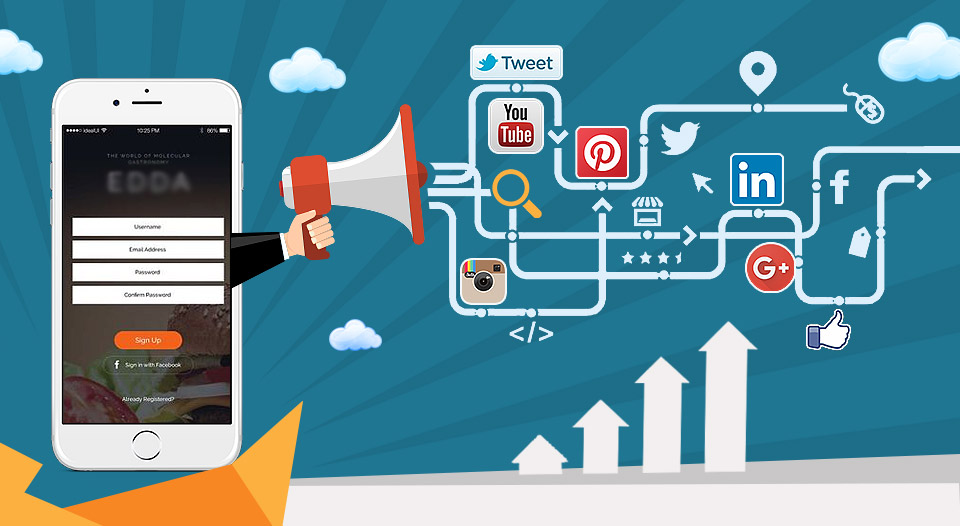
With the emergence of popular social media channels such as Facebook, LinkedIn, and Twitter, you will have the best opportunity to market your apps. Social media is one of the most effective channels for app promotion. By promoting your apps in these channels, you can generate high revenues.

4.      User reviews

Offering free versions to potential users is half the battle won. Make it a point to get their reviews. User reviews are the best ways to market your applications. The potential app purchasers will get to know the features and performances of your app.

5.      Creating app videos

Video creation is another significant way of promoting your app amongst a potential audience. Creating highly engaging and exciting app videos will attract numerous users to your application, To create high-quality app videos, using a video editor tool is essential. This tool enables customization with transitions, effects, filters, and text boxes, enhancing engagement and appeal, thus driving users towards taking action., thus driving them towards taking actions.

With these marketing tips, you will surely achieve successful app promotion, marketing, and advertising.

Promotion is important

Irrespective of your app designs and functions, targeted promotion, seems to be a highly crucial necessity. No matter what kind of application you create, successful marketing will always be the priority. While developing interactive and intuitive apps, developers should also ensure effective marketing.

Targeted marketing will help your app get discovered in the app stores. As the developer, you will have the opportunity to earn high revenues and take your apps to numerous customers. Build associations with leading app marketers capable of devising the best app marketing strategies for your mobile applications.

How A Highly Functional Mobile App Helps Your Business Grow

Whether it’s for shopping or posting an image on Twitter, you spend almost half of your day on mobile apps. Turn to reliable market statistics, and you will discover that mobile apps account for approximately 52% of the cumulative time spent on the virtual platform.

But that’s not the end of the story. Another statistic reveals that users spend a whopping 89% of their mobile browsing time on apps. With such immense popularity enjoyed by mobile applications, business owners are finding it highly imperative to invest in mobile app development.

Mobile App Helps Your Business

Developing a highly functional mobile application is fine. But, before taking up the project, there’s a need for understanding its benefits. Unless you know how an interactive mobile application will ensure unsurpassed growth for your business, it won’t be wise to invest.

Check out the following article, as it helps you get an idea about the significance of mobile app development in your business growth.

1.      Creating awareness

If you are keen on spreading the word about your dream venture, attractive and functional mobile apps will prove to be the most efficient way to doing so. Developing a user-friendly app will create awareness about your business as well as buzz around your services. More and more customers will get to know about your services, which will inevitably result in unparalleled business growth.

2.      Effective customer interaction

For businesses and companies, there’s nothing more important than their target customers. Highly scalable and interactive apps ensure a great way of striking effective communications with your potential consumer groups. You can integrate push-notification features in your apps, thus keeping your consumers informed about new products, offers, and services.

3.      Predictive analysis

With big data and social media analytics gaining huge importance in the business arena, apps have become the greatest tools for knowing customer preferences and interests. Highly scalable business applications with intuitive and interactive features will act as functional data collection tools.

As the business owner or product developer, you will have the opportunity to tap into these crucial information sets, thus making significant improvements in your products and services.

4.      Targeting consumers

Other than offering insights into consumer preferences, mobile applications also provide you with crucial metrics on customer views. You will develop a clear idea about what interests your potential consumers, thus creating unique and exclusive contents for target groups.

5.      Managing business reputation

Business applications serve numerous purposes. One of its prime benefits is the availability of direct customer feedbacks. An interactive application will work as an active communication forum helping entrepreneurs, customers, and product creators come together to talk.

As the result, severe issues immediately get resolved through effective communications, thus boosting the existing reputation of your dream venture.

6.      Captivating the youth

A highly prospective business will unfailingly try its best to reach out to the youth. With fast-paced tech innovations already making news amongst youngsters, a stunning and intuitive business app will further strengthen your venture’s growth prospects.

Concluding thoughts

By now, you know the significance of highly functional business applications. Get one for your business and drive innovation, growth, and development for it.


How Mobile Apps Benefit Skill Development

By the end of 2016, average income for mobile app developers in the US will experience a massive hike. We can no longer deny the fact that robust and scalable mobile applications have taken the entire world by a storm. Look around and you will find almost every business and enterprise embracing mobile app technology as a core technology strategy.

mobile apps for skill development

Highly scalable mobile applications built on intuitive and interactive interfaces can take your dream venture to unparalleled heights of success. However, it’s here that we come across a crucial question.

What is the real objective of mobile application development? Is the app revolution only meant for the business world? Or it has other uses or applications as well.

Let’s find out.

Identifying prospects

Apart from the business world, you must have heard about the significance of mobile apps in various areas. Today, mobile application development has become the prime requisite for every single sector. Be it education, retail, manufacturing, and engineering, or media, mobile app development happens to be a crucial necessity for every single sector.

It is here that we discover a completely new prospect for mobile apps. With diverse range of functionalities, mobile applications also offer ample opportunities for skill development.

From basic cognitive skills in children to advanced analytical skills in grown-ups, mobile apps ensure comprehensive skill development for numerous individuals.

And how do mobile applications do that?

Let’s have a look.

What is skill development?

Before we move on to talking about the significance of mobile applications in skill development, it is highly imperative to develop an idea of the term ‘skill development’. The concept of skill development refers to the idea of developing skills that help you make a value addition to your organization. Some of the critical parameters in this regard include:

1.      Skills from action learning

According to market conventions and expert predictions, the major share of your skill development endeavor must encompass on-job activities such as project development, communications with teams, workforce management, and several other functions. You should develop 70% of skills from these sources.

How apps help: This is an area where mobile apps prove to be highly beneficial. Highly interactive and scalable mobile apps offer a robust communication platform for both entrepreneurs and their employees. You will develop and fine-tune your managerial skills, thus making it big in your respective professional arena.

2.      Striking communications and interactions

Developing communication skills will be an integral part of your skill development endeavor. According to expert suggestions, 20% of your skills must include communication capabilities, leadership capacities, and mentorship qualities.

How apps help: Today every business relies on the most efficient thought leaders and policy planners. If you wish to enter into that league, there’s no other way than to develop these skills. Highly interactive enterprise applications will help develop these communication and leadership skills.

The bottom line

Skill development is not just a simple business need. Rather, it’s the cornerstone towards embarking on a successful career. And interactive and scalable mobile applications will make the process highly entertaining, comfortable, and convenient for you.

How Mobile Apps Benefit Telecom Industry

Whether your business venture belongs to the retail arena, entertainment sector, educational fields or telecommunications, robust and scalable applications will be the gateway to unparalleled growth and development. With a majority of the consumers performing every crucial action using his/ her mobile, business owners and entrepreneurs are finding it increasingly mission-critical to invest in mobile app development.

mobile-app-telecom

Let’s turn to stats, shall we, for a complete lowdown on the significance of mobile apps for businesses.

By 2019, the mobile service revenue will reach $1.1 trillion. At least, that’s what reliable statistics has to say. Quite like several other industrial sectors, the telecom industry is not new to mobile apps. However, some of the companies operating in this sector are completely unaware of what mobile apps can do for their businesses.

Let’s take a look at how mobile applications can ensure better service delivery and customer engagement for telecom businesses.

1.      Unmatched customer service

If you are one of those key players in the telecommunication arena, investing in mobile app development will be the best thing to do. Telecom companies with service-information applications achieve huge success in taking their services and solutions quite closer to potential clients.

By building feature-rich and highly scalable apps, telecom business owners can provide customers with a comprehensive overview of their services. Potential clients will find it easier to look for your services and gain information about new launches. Some of the exceptional features worth integrating into your app include:

  • Service gallery
  • Product support options
  • Images and videos
  • Company information
  • Feedback forms

2.       Effective reporting solutions

Whether you are sending reports to your valuable clients or your managers, reporting will always be an integral segment of telecommunications operations. A robust reporting application will help you create engaging reports, thus increasing the willingness of your supervisors and clients to read them.

Mobile apps will come with unique features and functionalities that make data entry, extraction, and reporting, easier than ever.

3.      Streamlined sales support

Apart from ensuring benefits at the consumer level, highly functional mobile apps will also promote collaboration amongst your employees. You could invest in a high-performance sales support app and help your sales staff pitch in the right offers, in an interesting and visually pleasing manner.

A sales support application also comes handy, when your sales representatives require quick information on your company’s sales policies. The following features in your sales support app will make it more interesting and engaging.

  • Video and image gallery
  • Sales forms
  • Lead generation forms
  • Comparisons between competitors

4.      Meeting challenges and solving crisis

Accidents don’t occur with prior notifications. Irrespective of the nature of the emergency, your workforce must be prepared to carry out the highly crucial functions. It is here that crisis management applications prove to be highly beneficial for businesses. With a unique directory feature, these apps offer swift and instant access to all the important contacts. You can immediately get in touch with them, thus preventing any further debacles.

Conclusion

Interactive and intuitive business applications will ensure some of the greatest advantages for telecom businesses. You can guarantee better delivery of services, by making your company app-ready.

Ready to start building your next technology project?