GoodWorkLabs at the Google Mobile Academy

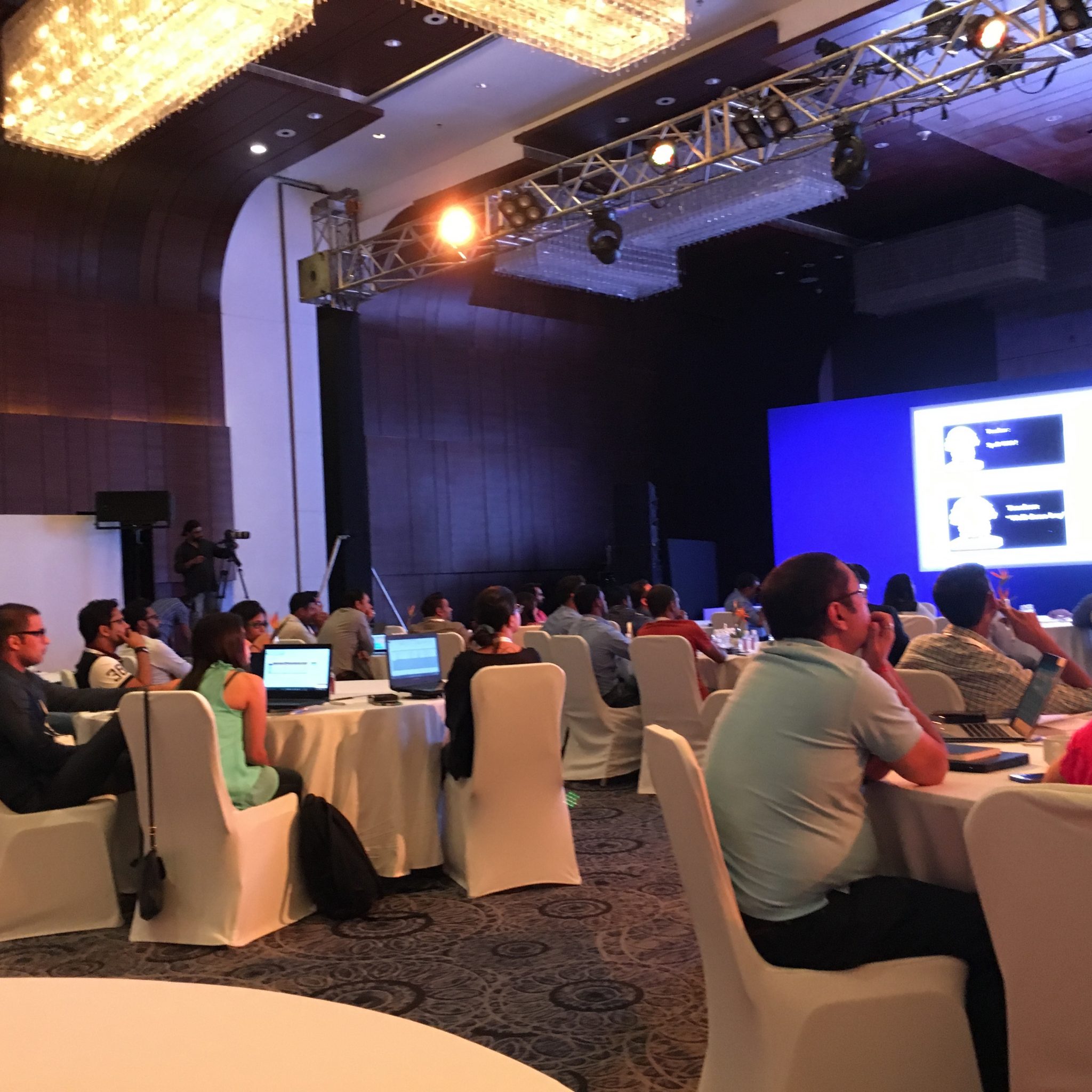
The event hosted some of the most eminent names from the web and mobile technology sector who contributed their on-field industry expertise to the Google knowledge bank. GoodWorkLabs CEO, Vishwas Mudagal, was invited to be a part of the panel discussion at the event to help understand the state of mobile web in India. As a web and mobile technology thought leader, Vishwas spoke about the future of mobile web and conveyed the need for rapid advancements and knowledge sharing in the mobile web technology sector.

Click here to read Vishwas Mudagal’s Panel Discussion at the Google Mobile Academy!


Stall

GoodWorkLabs stall at the Google Mobile Academy Event


Stall Vishwas and Sonia GoodWorkLabs

GoodWorkLabs was invited to be a part of the event to extend our expertise as mobile web technology experts


Goodworklabs stall google

The GoodWorkLabs team was present at the Google Mobile Academy event as Google Developer Agency Partners


Google mobile web event 2016

Experts in the field of Mobile Web made their presence felt at the event.


Vishwas Mudagal Google Event

GoodWorkLabs CEO, Vishwas Mudagal was invited to share his opinion as a technology thought leader.


Panorama

The panel discussion was aimed at understanding the future of mobile web in the Indian market.


Vishwas Mudagal Google Event

Vishwas Mudagal spoke about the importance of fast and accessible mobile web technology and the need to accelerate this tech.


GoodWorkLabs Stall at Google Event

GoodWorkLabs is a market leader in providing rapidly deployable and beautifully developed Mobile and Web Applications.

Importance of Enterprise Mobility Management in Modern workplace

A number of Indian and global MNCs have, since a very long time, upgraded to the concept of BYOD i.e. Bring Your Own Device. Each professional, thus, brings their own device to work and accesses wireless and mobile networks through the company platform. This was initially done to aid the workers and support them with their network needs. Now, it also doubles up as a surveillance system to detect the calls/SMS that could be possibly causing internal fraud.

Importance of Enterprise Mobility Management in Modern workplace

Enterprise mobility management is a tool that allows the owners to keep track of the incoming and outgoing calls and SMS and emails that directly affect the company’s functioning. This process or method of internalizing networks also provides support in cases of data fraud or when the device is lost. Data that is susceptible to fraud has higher chances of being accessed through various unfair means.

Enterprise mobility management looks after this very situation. All the company data on a worker’s device is protected through passwords and easily erased in case a device is misplaced. This reduces the chance of misuse and apotential threat to the company’s database is also diminished.

Key factors for successful implementation of Enterprise mobility management

Within the broad spectrum of Enterprise mobility management, there come three important yet very common issues that need instant requital. These points of consideration also enlist in detail the significant aspects of Enterprise mobility management.

  • Mobile security

In this age of regular mobile habit, handset safety is a major factor to be addressed. Simply because it is easier to access, we tend to store a range of data and recordings that are needed in our workplaces in our phones. This makes mobile security even more significant an issue.

Under the Enterprise mobility management tool, users can easily lock data and other relevant documents on their handsets and prevent any mistreatment on illegal admittance. Furthermore, the set passwords can be brought into use by the administrators and through complete blocking or data wipe out, the records can be protected.

  • Mobile device management

The applications on a personnel’s mobile device need a constant upgrade for the device to function smoothly. Through the enterprise mobility management tool, professionals working on the system make constant efforts towards this and ensure that the handset is managed rightly. This also keeps the data on a mobile handset perfectly synced with the company’s database.

Nowadays, cloud storage have increased that allow users to directly save edits to the cloud storage and rule out chances of data infringement or loss or beyond deadline submissions. Along with this, mobile device management has resulted in better productivity and increased security. Better productivity is dependent on increased security as lesser fear of loss of data induces better commitment towards work.

  • Mobile application management

The applications on a user’s mobile device need correct management for smooth performance of the device. The final output of a person depends on upon the clarity with which the devices around him/her work. Mobility management makes sure that these minor subjects are taken care of, and specific taskforce is delegated towards this certain job.

Enterprise mobility is fast gaining recognition amongst new start-ups as well. This is one aspect of technological advancement that is rapidly seeing growth and popularity.

GoodWorkLabs Awarded Red Herring Asia Top 100 2016

GoodWorkLabs Red Herring 2016 Winner

Bangalore/San Francisco – 21st September 2016

GoodWorkLabs announced that they have been awarded the Red Herring Asia Top 100. A prestigious recognition, Red Herring is one of the World’s Leading innovation and technology magazines. Hand-picked by their editorial board for being one of Asia’s most promising companies set to take the tech world by storm, GoodWorkLabs set themselves apart as thought leaders in the sphere of web, mobile, and software development.

Since 1996, Red Herring has made a mark in the world of business innovation for recognizing promising companies that are breaking boundaries and showing rapid development in their space of expertise. Red Herring Asia Top 100 2016 enlisted over 2000 privately financed companies in Asia, and through rigorous benchmarks based on both quantitative and qualitative criteria, such as financial performance, technological innovation, business model, and market penetration, awards the Top 100 for their exceptional growth and promise.

Vishwas Mudagal, CEO and Co-Founder, GoodWorkLabs said, “We are honoured to have been declared winners for this most prestigious award that recognizes the fastest growing and the most innovative companies in Asia. We have grown tremendously since the last year and continue showing a positive revenue growth of 500% year on year. With this rate of growth, we have on-boarded large-scale clients globally and will continue to design and build futuristic technology for the world.”

“In 2016, selecting the top achievers was difficult as always,” said Alex Vieux, publisher and CEO of Red Herring. “The variety, depth, disruption and traction we saw from the early stage companies to those with significant scale made 2016 a great vintage to judge. The Asia winners are representative of the amazing ecosystem that never ceases to astound, with new and experienced entrepreneurs continuing to push the barriers of innovation. As one of the winners, GoodWorkLabs should be proud of its accomplishment.”

Here is a complete list of Red Herring Asia Top 100 2016 Winners.

Impact Of Mobile Revolution On Healthcare Industry

Technology and its advancements have become an integral part of modern lives. Dramatic revolution in mobile technology has made smartphones the most sought after technology of all time. Not even the industrial revolution had made such an impact at such a rapid pace. No industry has been left untouched by the impact of mobile revolution. Healthcare is no exception. There are a number of interesting mobile applications pertaining to healthcare and fitness industry. The remote monitoring device is one such example of the impact of mobile revolution on healthcare.

MOBILE REVOLUTION ON HEALTHCARE INDUSTRY

Remote monitoring devices record vital signs and electronically transmit them to your individualdoctor. Any abnormality, if detected, the doctor can reach the patient as soon as possible. Thus, technology has made healthcare providers more proactive and involved with patients’ health.

Since the use of the internet is fast penetrating all areas of peoples’ life, the need to make the stakeholders realize the benefits of mobile technology for healthcare Industry has also arisen.

How has technology disrupted the healthcare landscape?

Following are some of the areas in which mobile revolution has made deep impacts in the healthcare industry:

  • Applications for Relapse prevention in Schizophrenia patients and using mobile technology for recording and gathering asthma data have made mobile phones the need of today in the healthcare industry.
  • NICHE pilot study deals with the impact of mobile phone technology on type 2 diabetic patients’ self-management. This technology uses the internet and mobile phones to improve diabetic healthcare.
  • Another application of mobile phones in diabetic care is the FTA(Few Touch Application). It uses a diabetes diary in mobile phones to provide support to the diabetic patient for managing sugar levels.
  • Headache is yet another area where patients can use mobile applications to help themselves. However, types and intensity of headaches vary from person to person. So you cannot be sure about the use of mobile technology in treating headaches, but in the long run, this application would be very useful for the people.
  • The automated speech recognition for time recording is a medical treatment in an emergency due to unavailability of medical facilities.
  • Mobile phones can also be used during treatment of mental disorders as they are utilized in the therapeutic sessions by psychiatrists.
  • Intelligent biomedical clothing for disease management that revolutionized medical treatments is also a part of the mobile phone revolution.
  • A number of fitness apps have also come into the market providing health tips and fitness hacks to the people. Some apps send regular notifications to the users prompting them to follow a better diet plan and routine than their existing one. These fitness apps can even be customized according to users’ needs and demands.
  • Mobile Apps can now also be used by patients to book appointments with doctors, schedule lab tests, access their reports online. This has introduced more transparency in a patient’s interaction with the doctor.
  • Mobile Technology has made best medical facilities accessible for patients located in distant or rural areas also.

In a nutshell, mobile applications have opened up new avenues in personalized healthcare, disease management and an improved way of communication between the patient and health care provider.

Thus, there has been an enormous impact of the mobile revolution on the healthcare industry and this advancement in mobile technology is still to continue and may produce even better results.

Economic Times features GoodWorkLabs on Making Great Apps

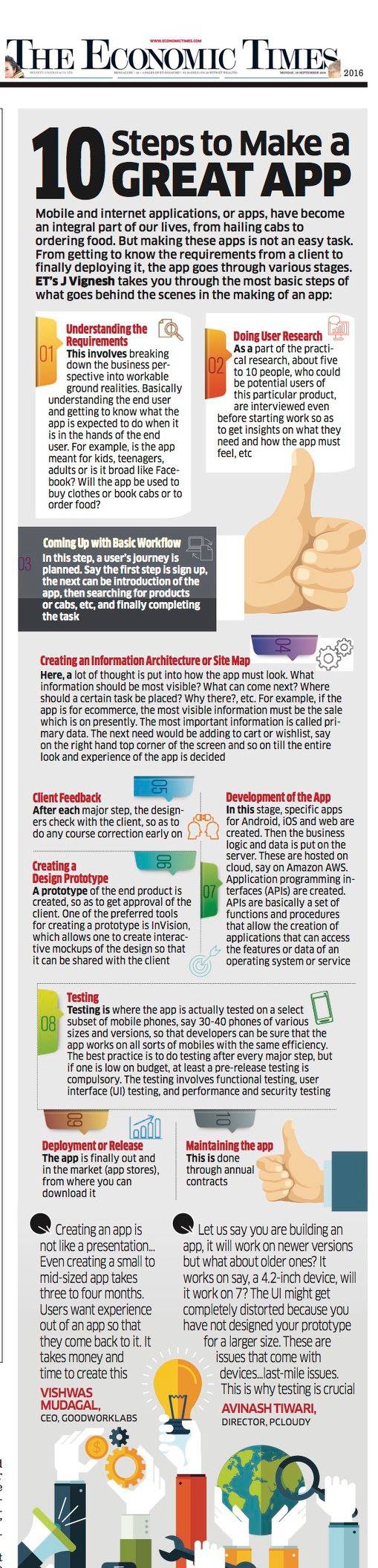
The Economic Times featured an article today on the 10 Steps to make Great Apps. Fueled by GoodWorkLabs thought leadership the article goes on to talk about the crucial steps one needs to take to ensure the success of their Mobile or Web Application.

Mobile and Web Apps have taken over the tech space and now contribute to a large chunk of the information exchange online. At GoodWorkLabs we help companies evolve by developing insightful and prognostic mobility strategies. We are the architects of some of the most user experience driven apps and mobility solutions in the market.

Read the article here to know more about the ten steps we follow and ascribe to while developing the perfect app strategy!

14361230_1218976178144802_1367166084922956150_o

Enterprise Mobility – Benefits and Challenges

With the ever-growing popularity of on-the-go operations, businesses are warming up to the concept of enterprise mobility. By helping companies develop a dedicated mobile workforce, enterprise mobility takes their growth objectives forward. Especially, the rapid proliferation of mobile devices adds more power to this concept. Skilled and efficient employees are rendering remote support, thus keeping your bottom lines intact.

However, it’s not always that good or beneficial. In addition to the numerous advantages, enterprise mobility has its fair share of drawbacks too. While unsurpassed productivity remains at the top of its benefits, high development costs happen to be a serious roadblock.

On that note, let’s get down to discussing the crucial benefits and drawbacks associated with enterprise mobility.

Enterprise Mobility - Benefits and Challenges

Benefits of the concept

Statistical Insights will present a crystal clear picture of the issue. According to market stats, mobile applications increase and improve employee productivity by 36% and 40%. A whopping 70% of enterprises have invested in mobile workforce, with the other 20% gearing up for it.

So, what do these stats suggest?

Productivity is highly critical to the success of your dream venture, and enterprise mobility aims to take it to unmatched heights. With highly productive employees working for your business, huge ROIs won’t be a distant dream.

1.     Promoting BYOD trends

BYOD trends can help your employees perform better. The liberty to work on their devices leads to workflow personalization. Your employees deliver amazing performances, as they have the opportunity to use their Smartphones at work. Enterprise mobility also grants the liberty to work from home or other locations, which further increases employee convenience.

2.     Work-life balance

The ever-increasing market competition is getting the better of your employees each day. Multiple assignments and commitments are making life tedious and tough for them. With enterprise mobility, they can now work according to their comfortable schedules.

With the availability of some of the highly functional enterprise mobility tools and solutions, workers are finding it quite easy to strike the perfect balance between work and life.

3.     Unmatched productivity

Irrespective of the nature of operations, productivity happens to be the prime requisite for every business organization. With a whopping 45% of mobile device usage being done during travels and transits, you can be sure of achieving your productivity goals within the shortest span.

Looking at the challenges

In spite of these amazing benefits, enterprise mobility is not without a fair share of hassles. Some of the critical challenges include:

1.          High development costs

The initial cost of developing enterprise apps is quite high. Perhaps, this is one of the prime reasons that 80% of enterprises delay their mobility plans and strategies.

2.          Browser-based apps or native applications

Most of the times, both the developers and business owners are in a fix while deciding the platform. Crucial considerations of the pros and cons will help them make the right decision.

3.          Security

With Cloud storage and operations coming into the picture, device security turns out to be a critical challenge. While adopting mobility, enterprises must devise robust plans for increased device security.

Parting thoughts

Enterprise mobility is significant and crucial for every business organization today. In spite of the drawbacks, you simply can’t ignore the numerous benefits it brings to your dream venture.

GoodWorkLabs at the Bangalore BizLit Fest 2016


bizliz fest_04


It should not be a surprise to people that business writing is no longer just about jargon filled theories and observations. There’s a new wave of business writers and they’re changing the perception of business literature forever. By bringing in elements of fast paced storytelling and building business theories around a riveting narrative, they have elevated traditional business literature to a creative art form.

Over the past few years, business leaders, young entrepreneurs, and even those outside typical managerial fields have taken to the fray of writing and publishing in the Business Literature genre. But unlike the Business Literature of the past, these new writers are doing something slightly different – they have managed to incorporate an element of creativity to the genre. This has made all the difference in the way people have perceived business literature, that it need not always be vastly complex theoretical concept stuffed into a 300-page book, but that it can also be a fantastic reading experience.

The Bangalore BizLit Fest has set a precedent like no other in incorporating neo-managerial literature into the mainstream audience. Being India’s only business literature festival, the Bangalore BizLit Fest promotes readers to put forth their ideas on paper, and showcases writers who have gone on to write unconventional but impactful business books. GoodWorkLabs CEO, Vishwas Mudagal with his book Losing my Religion, is a great example of how young minds have gone on to write national best-sellers that are inherently BizLit.


14352185_1215940945114992_4485389321478619708_o


IIM Bangalore is hosting the second edition of the Bangalore BizLit Fest 2016 on the 17th of September. With guest speakers like Ramchandra Guha, Devdutt Patnaik, Mukesh Bansal, and Prof. Anil Gupta, it not only is a star studded event, but also takes a noteworthy step towards a positive shift in promoting mainstream business literature.

The event provides a platform for business leaders, educators, aspiring writers, and young working professionals to interact in a space of learned discussion and knowledge sharing. With this year’s focus being on Entrepreneurship Literature, the Bangalore BizLit Fest is all set to capture widespread viewership in the IT Capital. So join us, as we discuss business, management, publishing, technology, and a lot more.

Progressive Web Apps – Bringing Mobile Web Back

Irrespective of the platform, responsive and progressive mobile apps have always enjoyed immense popularity amongst users. The number of iOS app downloads for the year 2015 is around 25 billion. The amount exactly doubles to 50 billion in case of Android apps.

These statistics speak a lot about the immense significance of mobile web apps. It’s because of this popularity that numerous business owners and entrepreneurs make it a point to invest in enterprise app development.

progressive web apps

Enter progressive mobile apps

With the ubiquitous presence of mobile applications, the biggest global search network, Google, has come up with a great proposal, keeping in mind the growing mobile users worldwide. Google has recommended a stronger ranking signal for progressive mobile apps that aligns with the mobile-first ethos of a growing number of organizations.

By leveraging browser capabilities and modern web, progressive apps aim to offer immersive experiences on web applications. In simple words, the term ‘progressive web apps’ represent technologies capable of bringing native application-like performance to web applications.

Essential browser features

Knowing the features of progressive mobile applications will help you understand their functioning. Browser makers will require adding some unique features for progressive apps. Some of these features include:

  • Service workers: Independent scripts, running in backgrounds at browser side.
  • Web-app manifest files: With the help of these files, developers can specify app attributes.
  • Enhanced cache (offline): It maintains the state of apps in between visits.

These are some necessary changes that web browsers need to make for successful progressive web app development and functioning.

On that note, let’s check out some of the amazing features or highlights of progressive applications.

Tracking the difference

Progressive web apps mark the arrival of a new age in mobile app development. By ensuring an amazing and immersive experience for users, these apps redefine the way businesses can target customers, personalize their mobile browsing experience, and elevate overall user experience to an altogether new level. The following features are totally characteristic to progressive mobile apps and come across as its biggest USP:

  1. Progressive: Offers perfect functioning across browsers
  2. Responsive: Seamless operations across numerous platforms
  3. App-like experience: Users will have the opportunity to experience app-style navigation and use app integrations.
  4. Connectivity-independent: With these applications, users can also operate in poor connectivity.
  5. Secure: Operates only through HTTPS
  6. Installable: You can also install it on your home screen
  7. Discoverable: Search engines can identify them easily as applications.
  8. Linkable: Share your progressive web apps via a URL. No need to rely on app-store installations

Latest developments

Although the browser support for progressive web apps is not quite impressive currently, Chromium-based browsers such as Opera and Chrome are on the way to provide the necessary support. With Mozilla Firefox and Microsoft Edge developing their interface, it won’t be long before progressive web applications find a strong foothold in the tech arena.

Let’s not forget that Google Inbox and Flipkart have already joined the progressive web bandwagon. With such developments, the future of mobile web and progressive apps seems to be quite bright and impressive.

CIO covers Exclusive with Vishwas Mudagal on Mobile Web

CIO, which covers expert opinions on enterprise IT from Industry Leaders around the world featured an Exclusive interview with GoodWorkLabs CEO and Founder, Vishwas Mudagal. In the interview Vishwas talks about the rise of Mobile Web and how innovations like Progressive Web Apps are redefining the Mobile Web sector.

Here is a snippet from the interview:

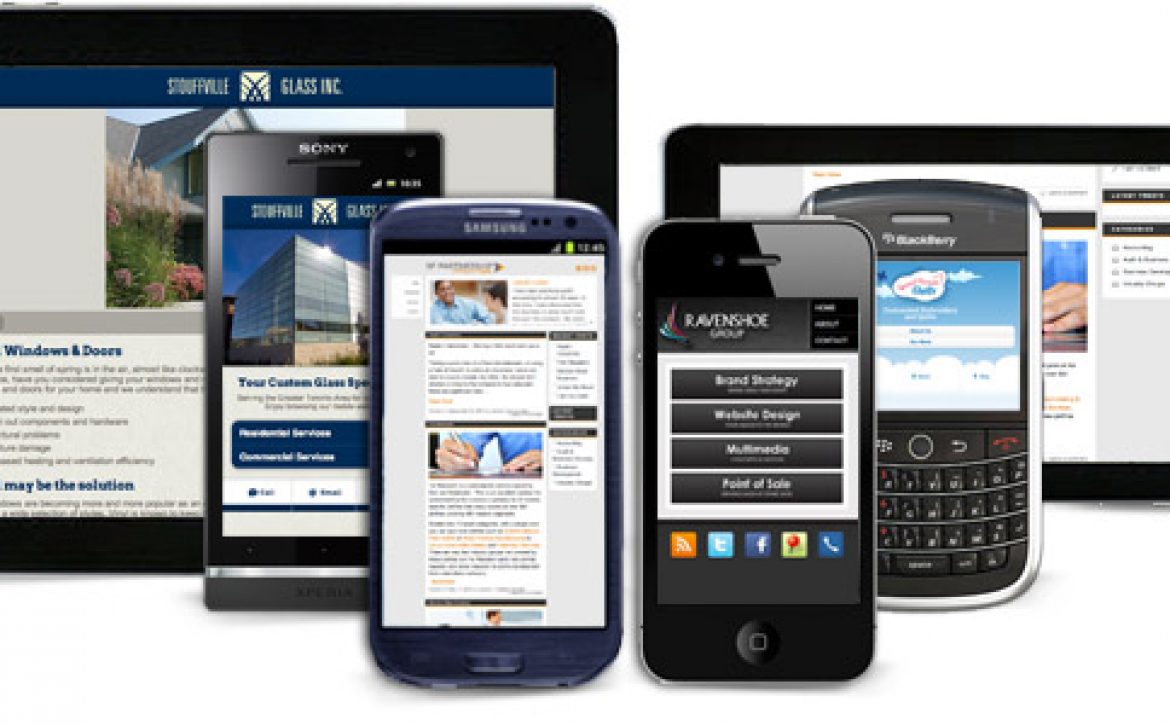
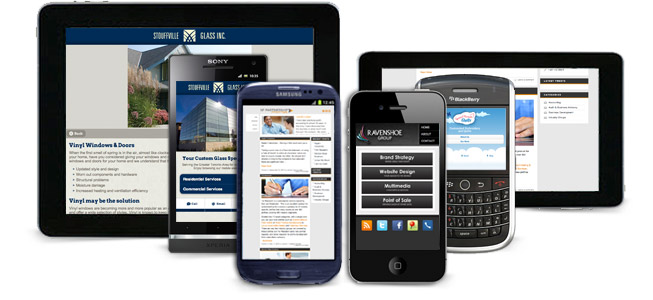
Today, most websites have a mobile-optimized design that can work on any device, be it a mobile, tablet or laptop. Of course, not all websites are optimized for all screen sizes. The basic purpose of a mobile website is to capture as many new customers as possible. 

Read more about Vishwas’s opinion on the comeback of Mobile Web Applications here!


Vishwas

The Role Of Usability Testing In App Development

You build a feature-rich and scalable app for your target audience, and you think that’s quite adequate for effective business promotion. Well, the reality might have a different story to narrate. It’s not just enough to create stunning apps; it’s also essential to market them in a targeted manner. Identifying user behavior and usage patterns will result in successful app marketing.

While app usage data happens to be the preliminary step towards comprehending user behavior, it’s usability testing painting the full picture. In a nutshell, usability testing presents a more accurate, comprehensive, and precise picture of user behaviors.

Let’s turn to statistical references for a complete lowdown on the topic.

The role of Usability Testing in App Development

Statistics speak

According to reports published by Salesforce 2014, almost 85% of Smartphone users consider mobile devices to be an integral part of their day-to-day functioning. With this statistical reference, you develop a clear idea of app data usage. However, it is Usability Testing helping you delve deeper.

With that brief introduction, let’s discuss the importance of usability testing in app development.

Uncovering the significance

Also known as the ‘black box testing’ strategy, usability testing reveals the true experiences of your application user. From identifying their comfort levels to their learnability, Usability Testing happens to be the key to comprehending user behavior.

Here’s how it is important for app development projects.

        I.            Better app marketing

When considered along with app data usage, usability testing seems to be of paramount importance for app marketing. App developers will have the opportunity to develop a hypothesis about user behavior and experience, thus identifying loopholes in design or deployment of the application.

Better app marketing will emerge as the direct benefit.

      II.            Improving opt-ins

Opt-ins can turn out to be the best way to ensure regular engagement with users. According to another report published in Salesforce, not more than 8% of app users ignore or avoid push notifications.

Therefore, app makers will have the opportunity to offer opt-ins depending upon customer requirements and preferences. Usability Testing will increase and encourage user opt-ins.

    III.            The five crucial components

While dealing with Usability Testing, you will come across five crucial concepts. These concepts play the key role in understanding user behavior, thus determining the importance of Usability Testing.

  • Learnability
  • Memorization
  • Efficiency
  • Satisfaction
  • Errors

With references to these parameters, app makers can identify user behavior in a targeted manner. On the other end, the end user will also have numerous benefits to reap.

   IV.            Significance for customers

Usability Testing happens to be the umbrella term for innumerable testing techniques including system integration, functional testing, smoke testing, and unit testing. Apart from app developers, it’s beneficial for the customers too. Some of the advantages include:

  • Easy-to-use software
  • High-quality app development
  • Short learning curves for the new user
  • Better acceptance of apps

Parting thoughts

If performed in the right manner, Usability Testing might just turn out to be the key to improved app performance and better user engagement. With this technique, identification of performance loopholes and mitigation of such issues becomes easier than ever! Stunning applications with unique functionalities is what you get as an outcome.


Ready to start building your next technology project?